
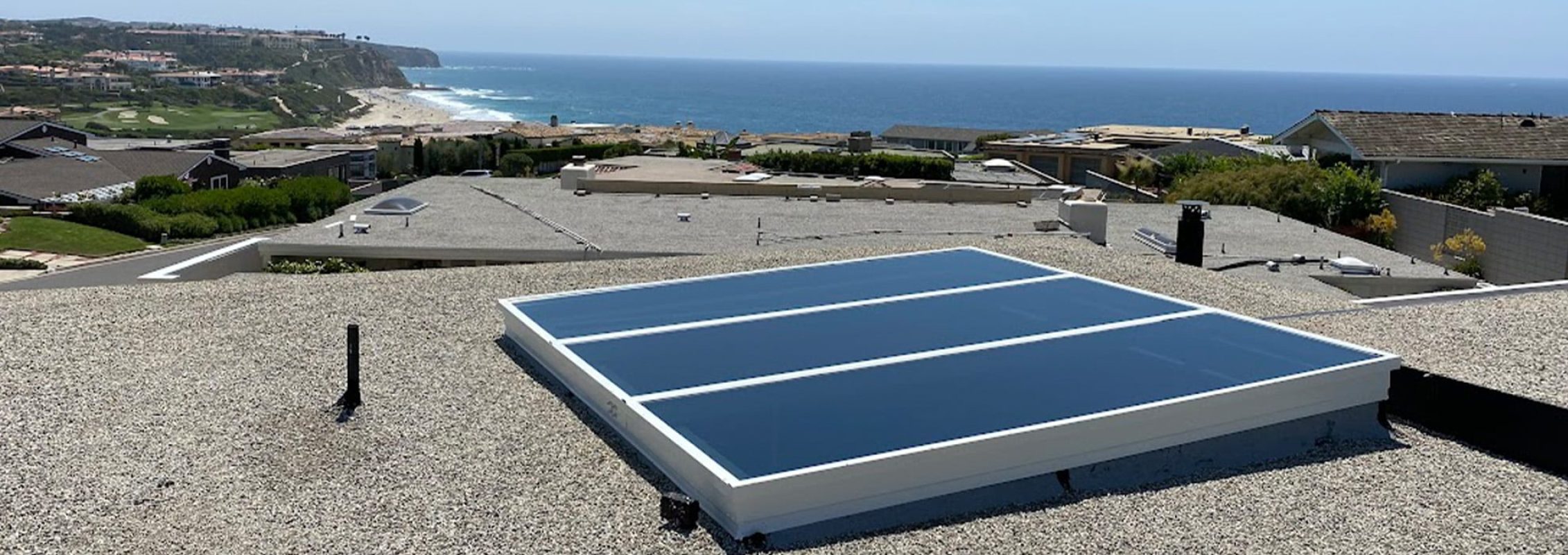
If you’re thinking about upgrading your home to let in more natural light, a skylight is often an attractive option. But what if you have a flat roof? The common perception is that skylights are best suited for sloped or peaked roofs. However, that’s a myth. Installing a skylight on a flat roof is not only possible but also comes with its own set of advantages and considerations. In this comprehensive guide, we’ll walk you through the essential factors you need to know, from choosing the right type of skylight to understanding building codes and more.
What Types of Skylights Are Suitable for Flat Roofs?
When it comes to installing a skylight on a flat roof, choosing the right type of skylight for flat roofs is crucial. Your options are somewhat different than those for peaked roofs. Primarily, you have three types to consider: fixed skylights, roof access skylights, and tunnel skylights.
- Fixed Skylight: A fixed skylight is an economical choice for bringing natural light into dark spaces. They are designed to provide a constant source of light but do not offer ventilation. VELUX is one brand known for high quality, fixed skylights.
- Roof Access Skylight: If you’re interested in a skylight that offers both light and access to your roof, this is your go-to option. It’s perfect for any flat roof that might need regular maintenance access.
- Tunnel Skylight: Also known as TCR Sun Tunnel®, these are ideal for areas where you want to channel light from the roof to another level of the house.
Fixed skylights are generally more expensive but offer superior glaze and curb features. On the other hand, tunnel skylights are relatively easier to install and are a practical choice for smaller spaces.
Are There Any Specific Building Codes or Regulations to Follow for Skylights on Flat Roofs?
Absolutely. Before you proceed with skylight installation, expert advice on local building codes is essential. These codes dictate critical areas like the maximum size of the skylight, how far it must be from the roof’s edge, and what type of roofing material is compatible with flat roof skylight installation.
For instance, some codes require that skylights installed on a flat roof must have a slight angle to allow the water run-off. This helps to prevent rainwater collecting on top, which is a common issue with flat roofs. Also, be aware that some areas require a permit for any significant changes to your existing roof, including options made for skylights.
It’s always safer and more efficient to consult a professional installer or roofer who is familiar with local regulations. Ignoring building codes can result in fines and could make your home more likely to leak or suffer from other issues.

What Are the Pros and Cons of Installing a Skylight on a Flat Roof?
Pros
- Natural Light: One of the most significant advantages is the influx of natural light. A skylight transforms dark spaces into vibrant areas filled with vitality.
- Ventilation: Certain types of skylights also come with ventilation features. This is a fantastic way to add fresh air into your home, enhancing the indoor environment.
- Energy Savings: With additional natural light, you can cut down on electricity costs. Quality skylights are designed to keep heat in during winter and out during summer.
- Aesthetic Appeal: M